Night guards are literally everywhere.
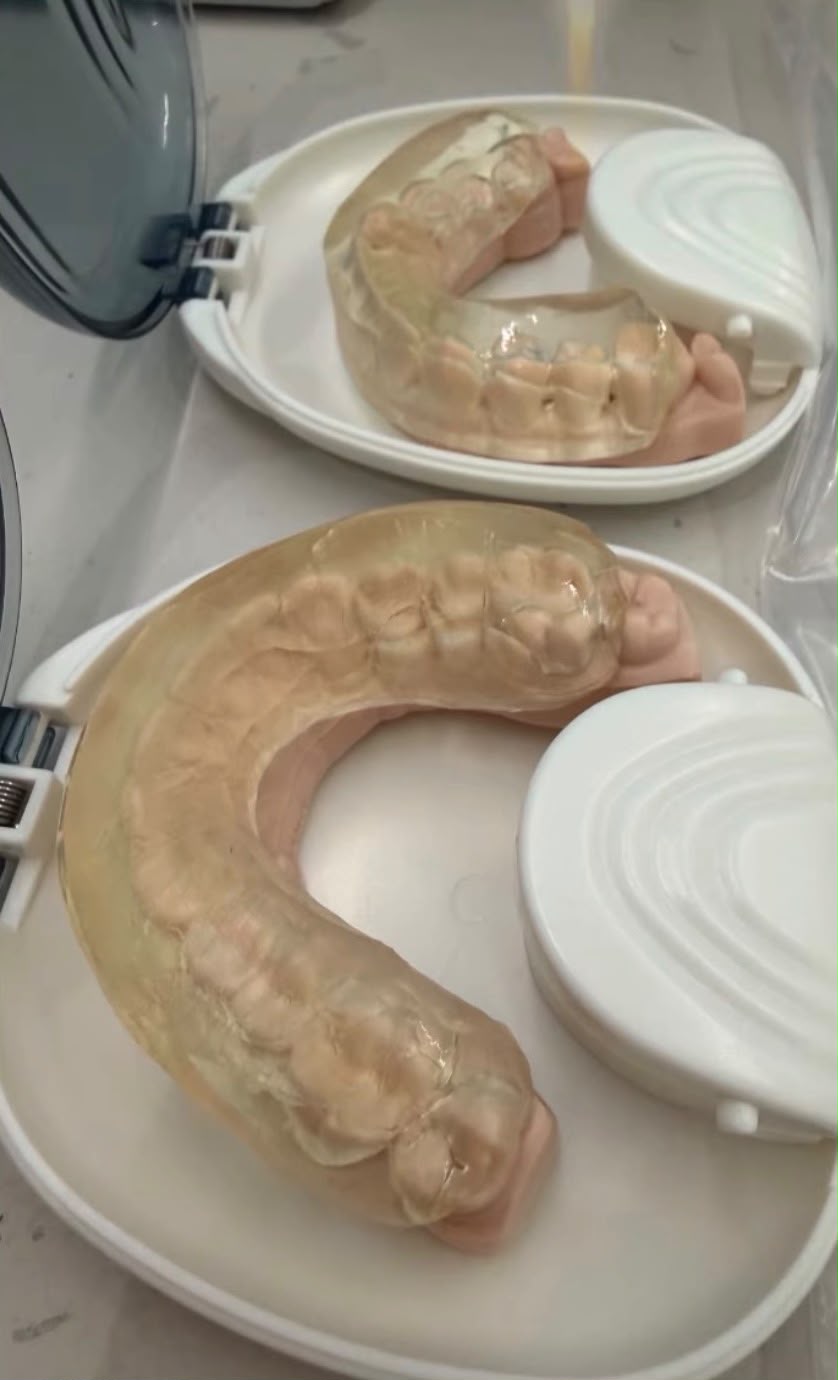
Patients grind their teeth. Patients clench. Teeth chip, crack, flatten, become sensitive, and suddenly the answer sounds obvious. “Let’s make you a night guard.”
And sometimes, that is exactly the right thing to do.
A well designed night guard can protect teeth from wear, reduce overload on restorations, and help some patients with jaw muscle symptoms. But here is the part that does not get said loudly enough.
A night guard does not automatically stop grinding. It mainly protects the teeth from the effects of grinding. That distinction matters.
Sleep bruxism is not simply “naughty teeth rubbing together.” It is a sleep related muscle activity. It can be linked with stress, medication, alcohol, caffeine, pain, bite instability, neurological factors, and in some patients, sleep breathing problems such as obstructive sleep apnoea.
So before we place plastic between the teeth and send someone away for the next ten years, we need to ask better questions.
Do they snore? Do they wake up tired? Do they wake with headaches? Has anyone noticed pauses in their breathing? Are they clenching because of stress, pain, airway disturbance, medication, or something else? Is the wear active, old, acidic, mechanical, or a mixture?
This is where dentistry needs to slow down. Because if a patient has undiagnosed sleep apnoea, a standard night guard may protect the teeth while doing nothing for the airway. In some susceptible patients, certain appliance designs may even worsen breathing by changing jaw position or reducing tongue space during sleep.
That does not mean every grinder has sleep apnoea. It does not mean every night guard is dangerous either. It simply means diagnosis comes before plastic.
In the UK, dentists can play a very important role in screening for signs of sleep disordered breathing, but obstructive sleep apnoea itself is a medical diagnosis. If symptoms are present, the patient may need appropriate medical assessment, sleep screening, or referral before deciding what appliance is safest.
There is also a big difference between a standard occlusal splint and a mandibular advancement device.
A night guard is usually designed to protect teeth. A mandibular advancement device is designed to help hold the lower jaw forward and improve airway space in suitable patients with diagnosed sleep apnoea or snoring concerns.
They are NOT the same thing.
So when a patient says, “I grind my teeth at night,” the answer should not automatically be, “Here is a guard.” The answer always first should be: “Let’s work out why.”
Because sometimes the night guard is useful. Sometimes it is incomplete. And sometimes, if we have not asked the right questions, it may quietly allow the real problem to carry on underneath.
Good dentistry is not just protecting enamel. It is knowing when the enamel is trying to tell us something.